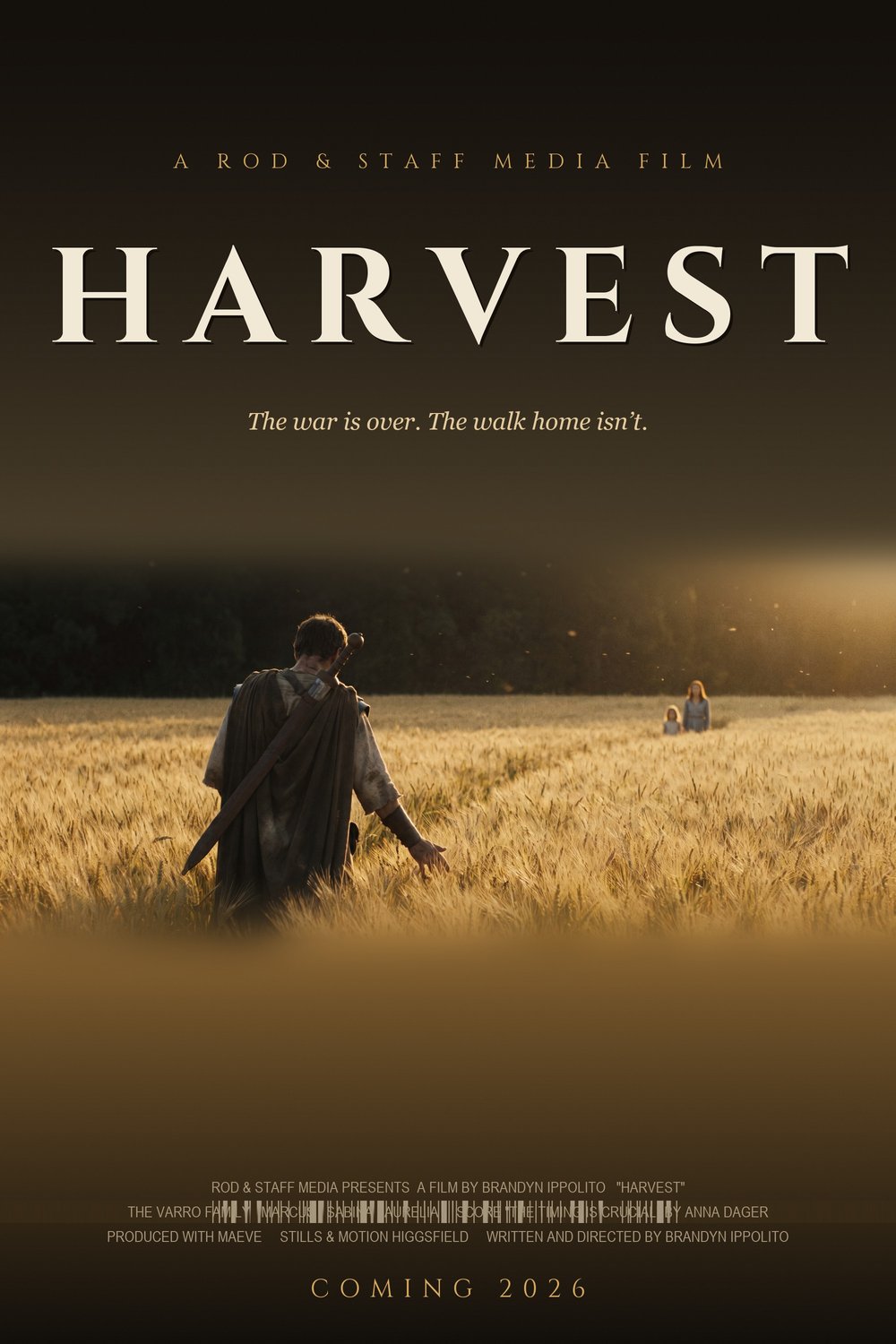
HARVEST one-sheet poster: a Roman soldier walking through golden wheat, his hand brushing the grain, beneath the title. The war is over. The walk home isn't. Coming 2026.
A Rod & Staff Media Film · Coming 2026

HARVEST

The war is over. The walk home isn’t.

A farmer who gave Rome six harvests walks the last field home — the war flashing shorter behind his eyes with every step, until only the wheat remains.

Roman epic 21:9 · 3:32 Score Anna Dager
The story

Two fields. One man.

There is a wheat field in the hills, three olive trees at its edge, and a house a man built with his father. Six harvests ago the levy came through the valley and took the man to the Empire's wars in the cold north — the kind of war a farmer does not come back from.

This film is the walk back.

Marcus Varro crosses his own field at last light, hand trailing over the wheat tops, armor carried instead of worn. And as he walks, the war keeps cutting through: the shield wall in the forest mud, the dust, the impact, the faces — flashes that come shorter and shorter, as if the field itself is closing them out. At the tree line, a woman and a small girl stand watching the grain. One of them has been telling a wheat-stalk doll the day's news every evening for six years.

The war does not get the last word. That's the whole point of the walk.
The Varro family

Six harvests apart

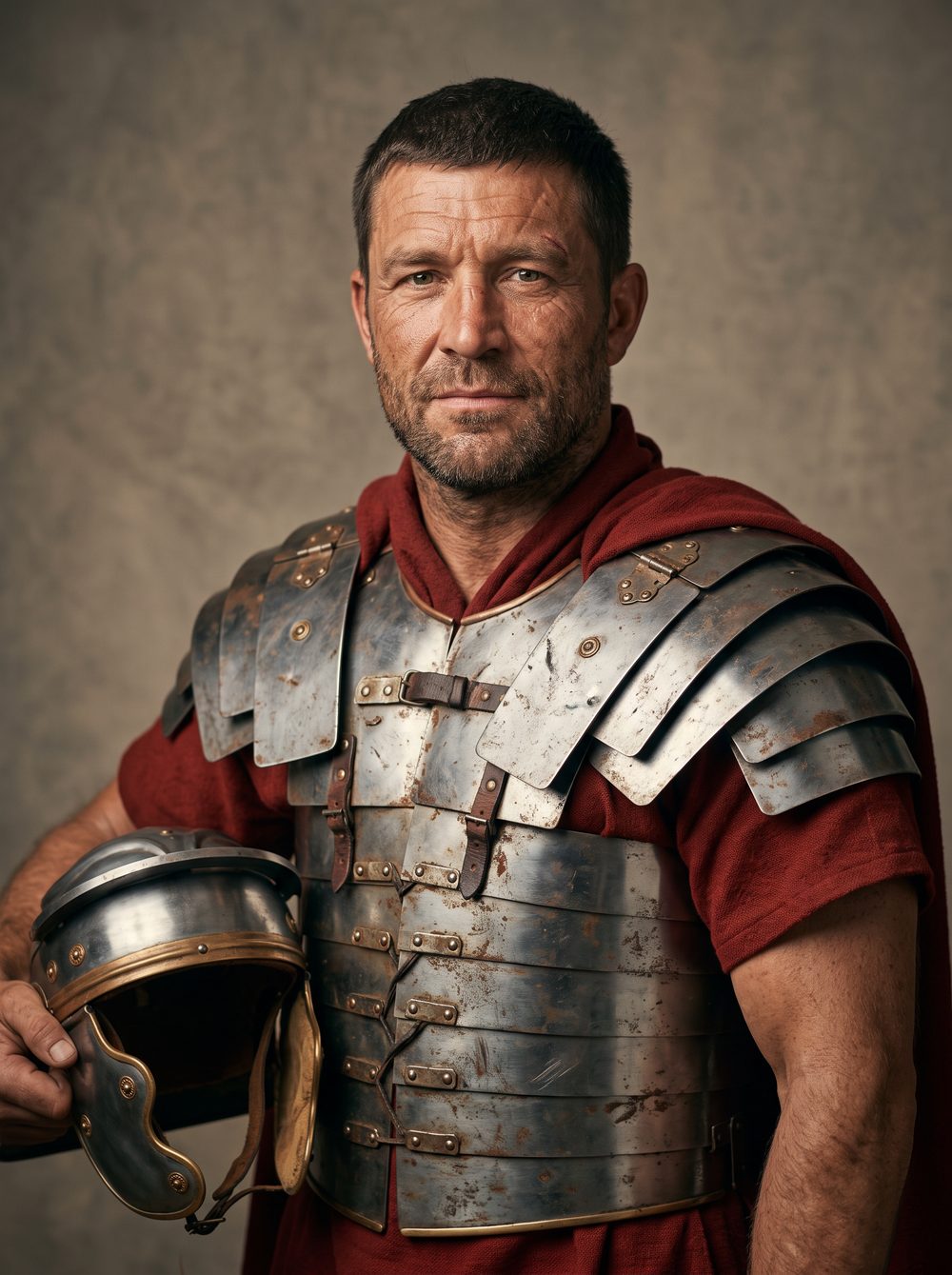
Marcus Varro — a weathered Roman legionary in dented segmented armor, helmet under one arm.
The soldier
Marcus Varro, 38

A farmer built like his field — the levy took him the spring his daughter turned one. Through six campaigns in the north he carried a small pouch of their own wheat seed, and in the worst of it he worked it between his fingers the way other men worked prayer beads.

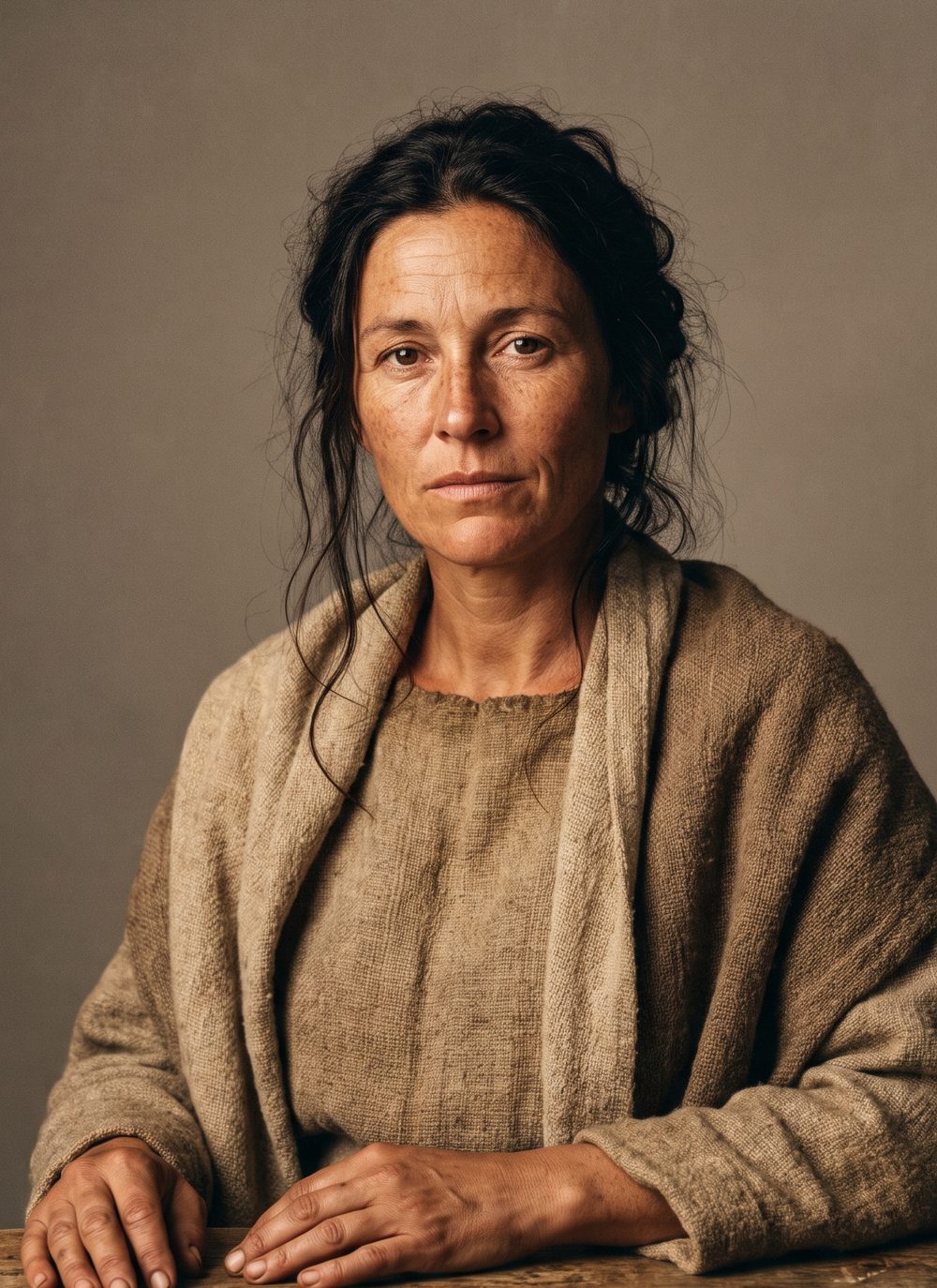
Sabina Varro — a Roman farmwife with dark pinned hair and a steady warm gaze.
The wife
Sabina Varro, 34

Named like the farm hills themselves. She kept the field alive alone for six harvests — sold the mule, patched the roof, never sold an acre. Every harvest she plaits a wheat-stalk doll for their daughter, so the child would know in her hands what her father's work looks like.

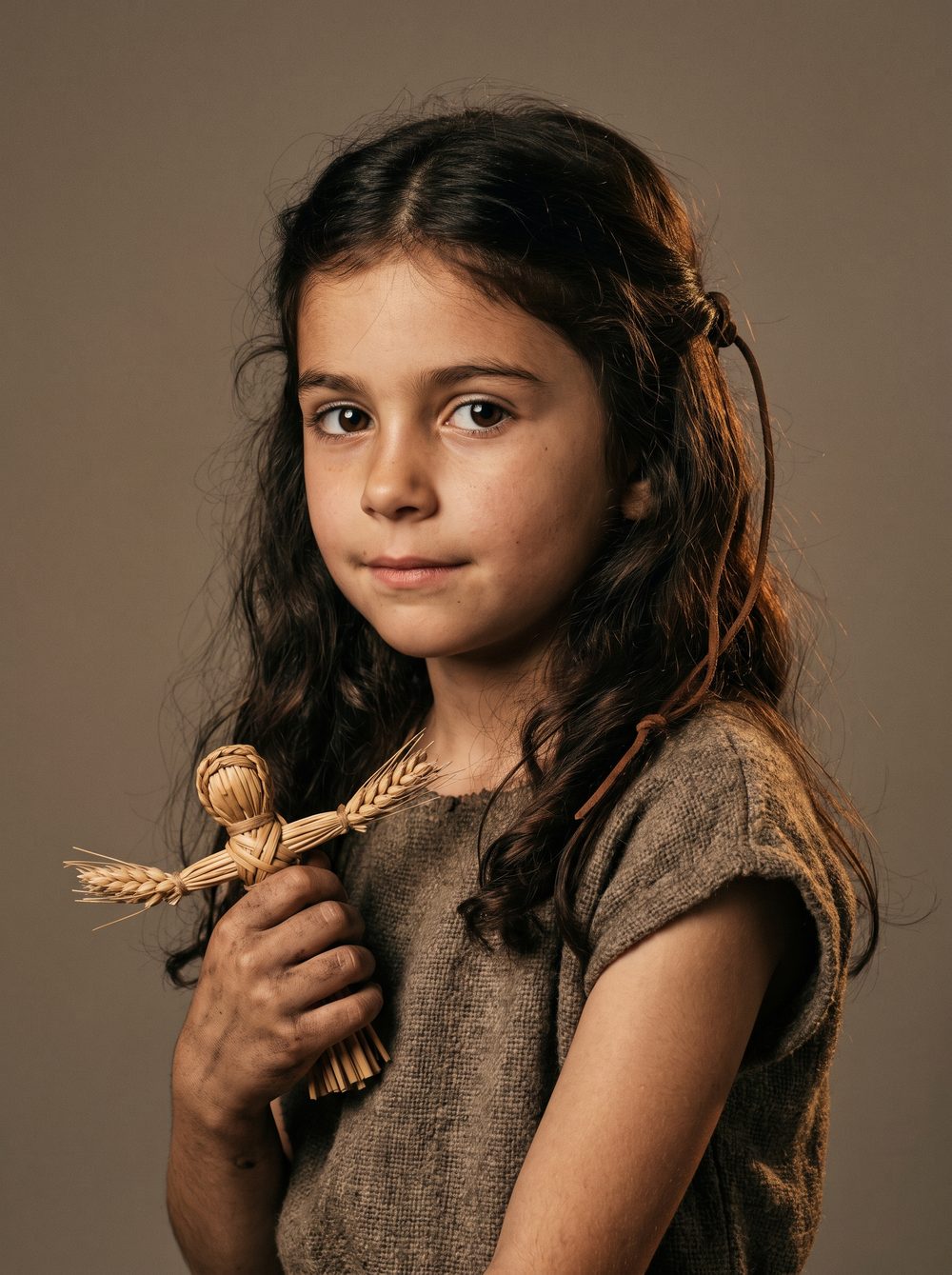
Aurelia — a Roman farm girl of seven holding a woven wheat-stalk doll.
The daughter
Aurelia, 7

"Golden" — born the spring the levy came. She knows her father as a story told at the fire, and the doll is "him": she tells it the day's news at the field's edge every evening. That is why she is the first to see the figure in the wheat. She is the one who watches.

The two strands

Gold against the cold

The film is built as a color argument: the peace strand lives in honey and wheat, the war strand in blue-gray steel and forest mud — and the cut between them is the engine. The war's flashes get shorter as the walk gets closer.

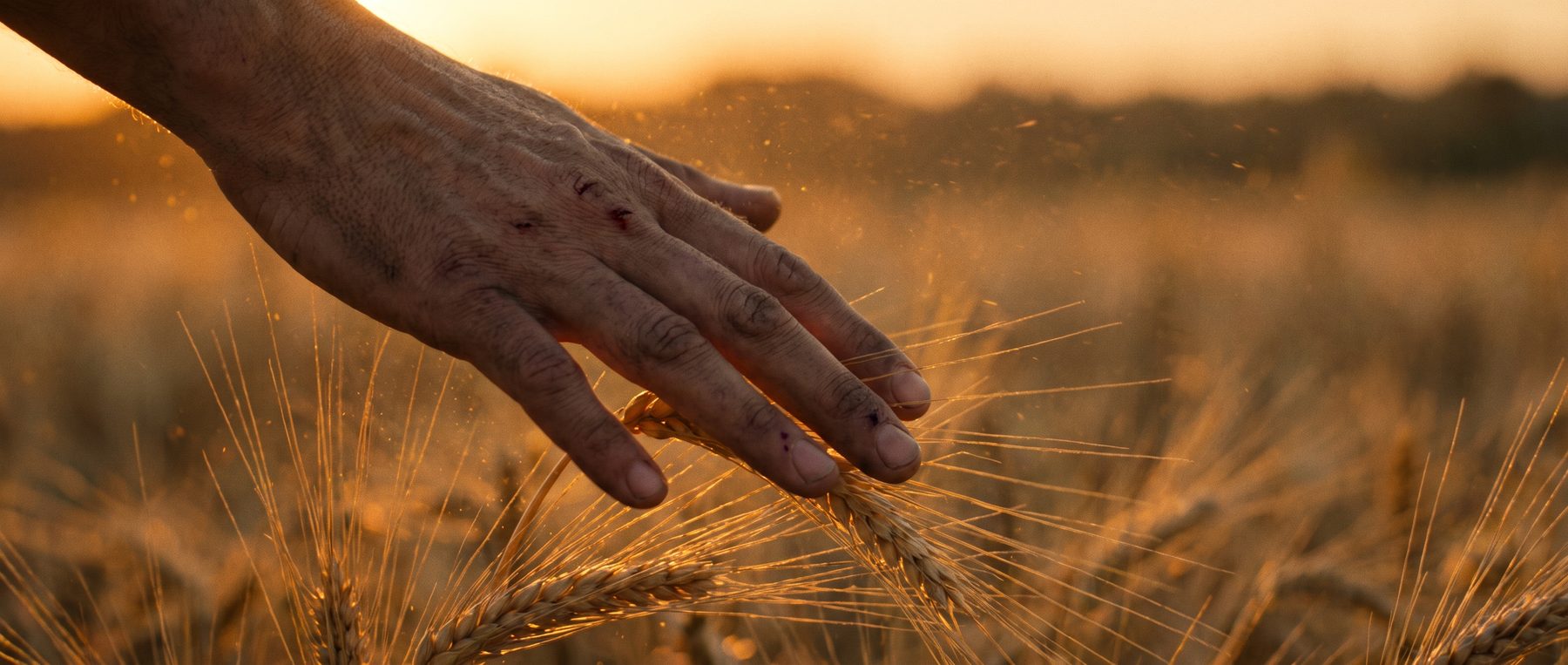
A battle-scarred hand gliding over the golden tops of ripe wheat, seed dust rising.
The film's signature image: a soldier's hand and the grain it came home to.
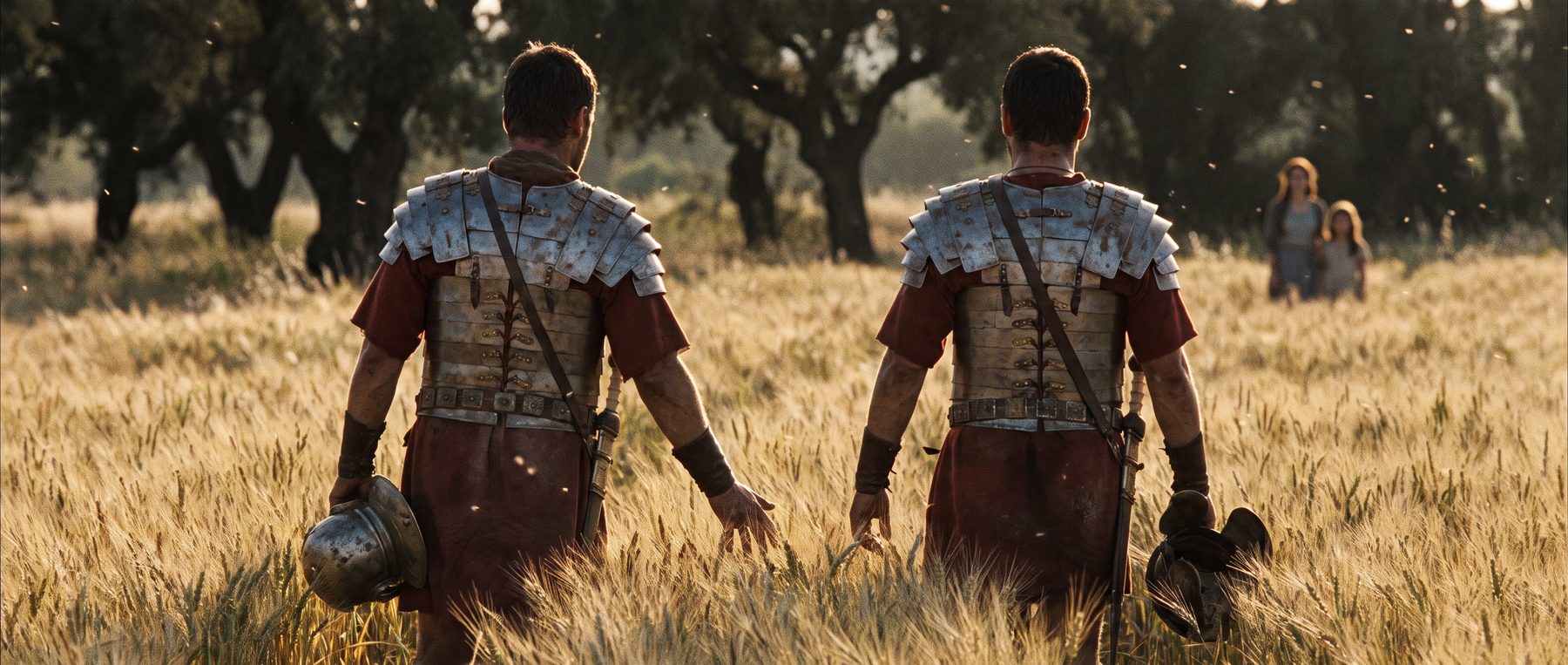
A legionary walking through golden wheat, helmet in hand, toward two distant figures at the tree line.
The peace strand: armor carried, never worn.
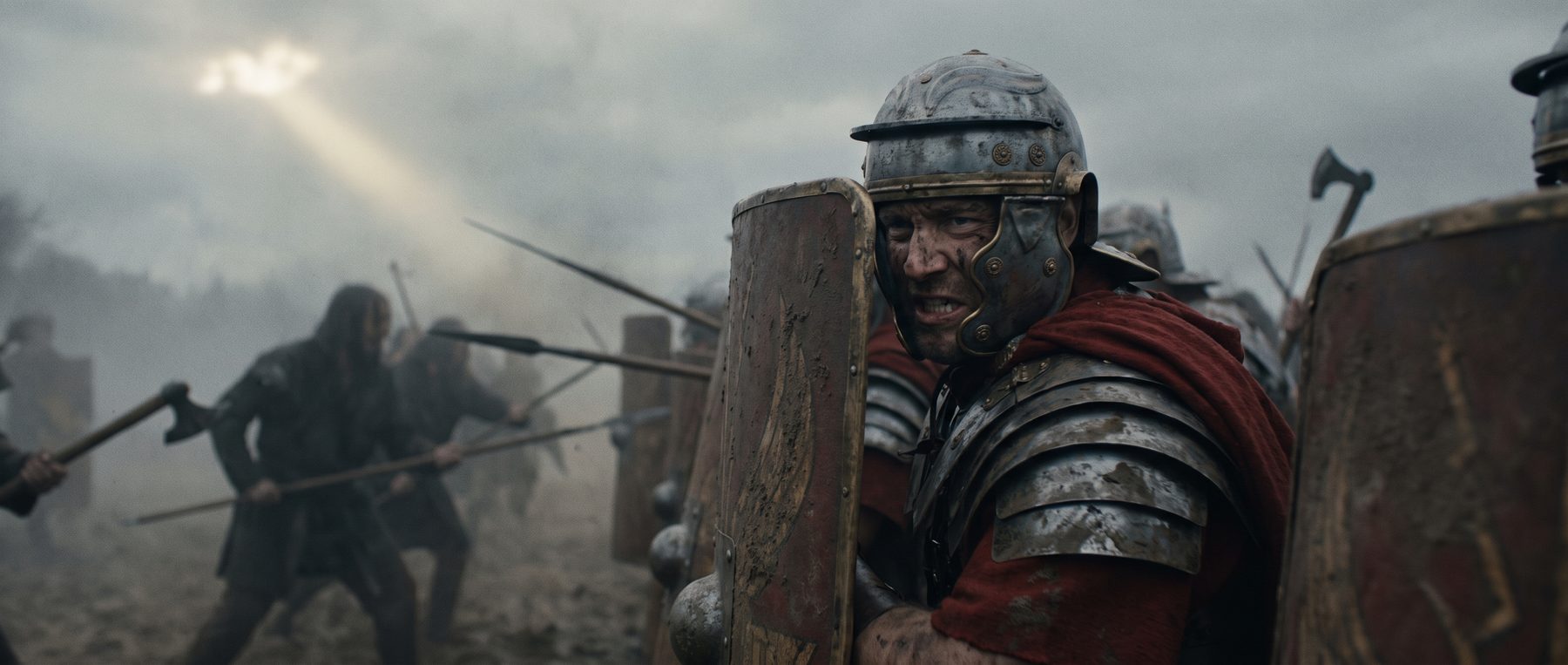
A Roman shield wall buckling under a charge in dust and smoke.
The war strand: impact and dust, faces and aftermath — never gore.
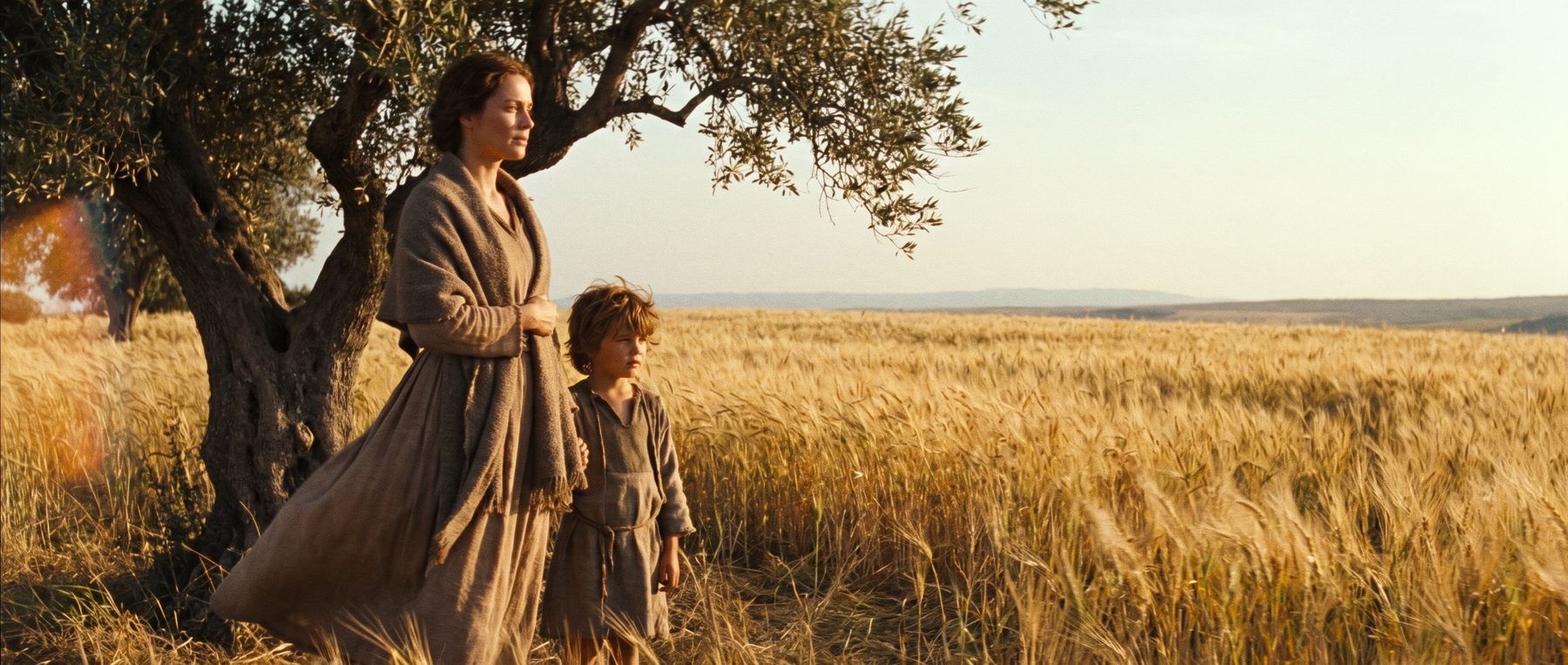
A woman and a young girl beneath an olive tree at the edge of a wheat field, golden light.
The tree line — where the watching happens.
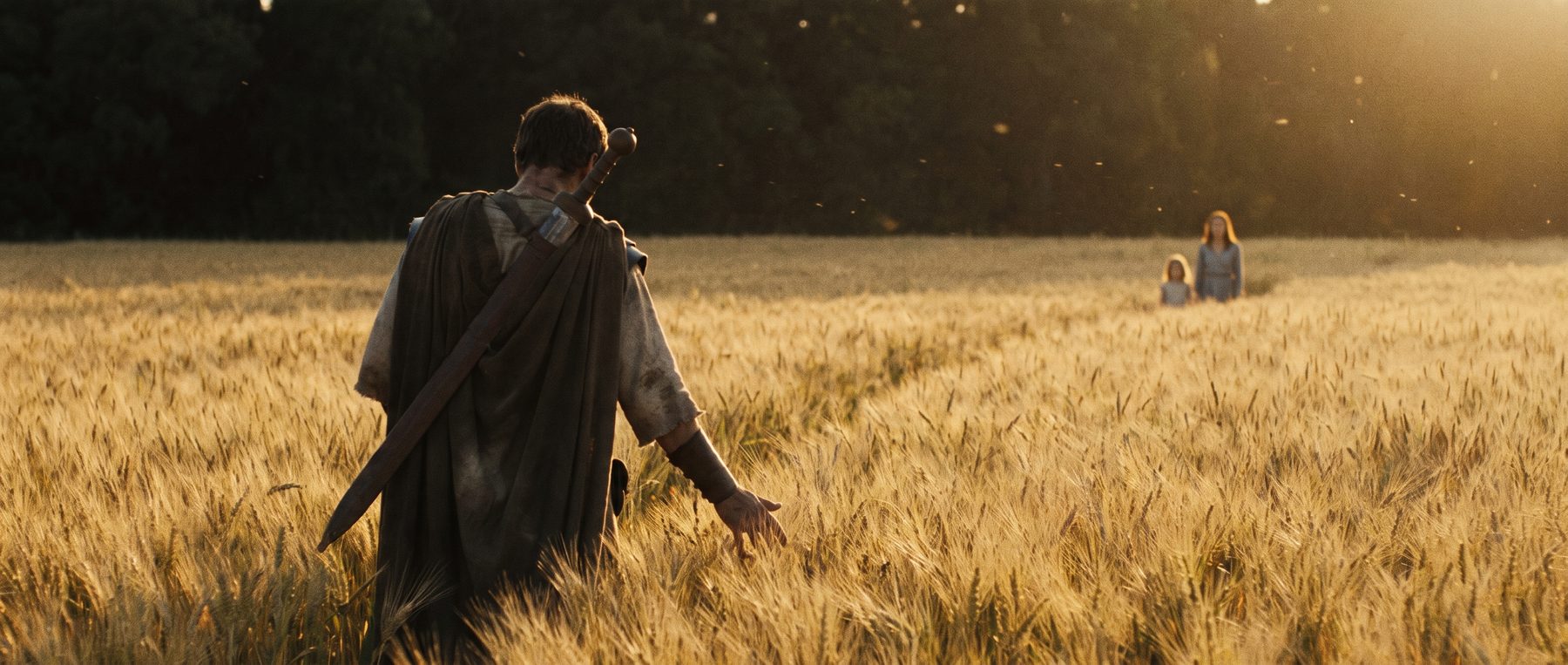
The soldier from behind, hand outstretched over the wheat, two small figures far ahead.
The walk itself: every step out of the war.
For the curious: the production bible →

How this film is being made — the track that answered its ending, the measured beats, the color argument, the casting call, and the director's pen on every frame.

The score

The track that answered the ending

The ending of this film — whether the soldier comes home — was decided by this piece: it does not shatter, it settles. Sixteen seconds of letting go, and he reaches them.

“The Timing Is Crucial”
Anna Dager · licensed via Epidemic Sound